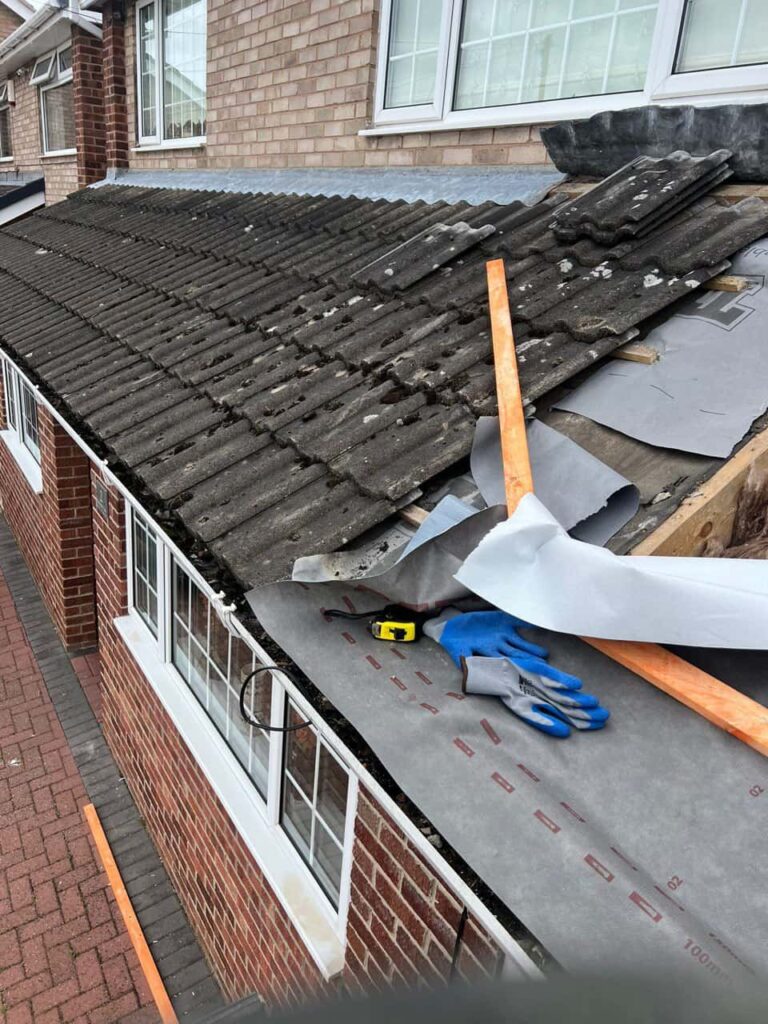
Most roofs experience some degree of wear as they age. Individual tiles can become damaged, mortar can deteriorate and particular areas may occasionally require repair. These issues do not automatically mean that a complete roof replacement is necessary. In many cases, targeted roof repairs can restore the affected area effectively.
The situation becomes different when deterioration is no longer confined to one or two isolated defects. When wear is visible across several parts of the roof, repairs may start addressing individual symptoms rather than the overall condition of the roofing system.
For homeowners in Walcot, Wiltshire, understanding what widespread roof wear actually means can make it easier to decide when continued repairs remain worthwhile and when a replacement roof deserves serious consideration.
What Is Widespread Roof Wear?
Widespread wear means that deterioration is affecting multiple parts of the roof rather than a single localised area.
For example, one slipped tile is normally an isolated defect. Several areas containing deteriorated tiles, weakened fixings, failing mortar and recurring leaks suggest a broader pattern.
Signs can include:
- Numerous cracked or damaged tiles
- Repeatedly slipping tiles
- Deterioration across several roof slopes
- Multiple areas allowing water ingress
- Worn ridge or hip details
- Deteriorating flashing
- Uneven or visibly tired roof coverings
- Repairs becoming necessary in different areas
The significance lies in the overall pattern rather than any single defect.
An Ageing Roof Does Not Deteriorate Evenly
Different sections of a roof experience different levels of exposure throughout their service life.
Some areas may receive greater exposure to wind and rain, while others can remain comparatively protected. Roof junctions, edges and changes in pitch can also behave differently from the main roof slopes.
As a result, an ageing roof may initially develop isolated defects.
Over time, however, deterioration can become increasingly widespread as more components reach a similar stage in their lifespan.
This is often the point at which assessing the complete roof becomes more useful than considering each new defect separately.
Repeated Repairs Can Reveal a Bigger Pattern
Where repairs are needed matters as much as how often they occur
Occasional roof repairs are perfectly normal.
The important distinction is whether repairs repeatedly concern the same isolated weakness or whether new problems continue appearing in different parts of the roof.
If one section is repaired and another unrelated area begins failing soon afterwards, the roof may be showing signs of broader deterioration.
Homeowners should pay attention when:
- New leaks develop in different locations
- Tiles repeatedly fail across separate roof slopes
- Several roof details require attention
- Previous sound areas begin deteriorating
- Repairs are becoming increasingly extensive
At this stage, a full roof assessment can provide a clearer understanding of the remaining condition.
Tile Condition Can Indicate the Overall Health of the Roof
Roof tiles form the primary external covering and are constantly exposed to weather.
One broken tile can usually be replaced without affecting the remainder of the roof.
Widespread tile deterioration is different.
If significant numbers of tiles have become cracked, damaged, loose or heavily weathered, replacing individual units may become less effective as a long-term strategy.
The question changes from “Which tile needs replacing?” to “How dependable is the roof covering as a whole?”
That broader question is particularly important when defects are appearing across several areas.
Problems Can Exist Beneath the Visible Roof Covering
The condition of a roof cannot always be judged solely from what is visible externally.
Tiles are only one part of the roofing system. Beneath them are supporting components that contribute to weather protection and overall performance.
When sections of the covering are removed during repairs, deterioration beneath the surface can sometimes become apparent.
This is important because replacing individual tiles will not correct more extensive problems within underlying roofing materials.
Where several layers or components have deteriorated, re-roofing can provide the opportunity to address them as part of one coordinated project.
Recurring Leaks Deserve Closer Investigation
A leak does not always originate directly above the visible damp area
Water can travel along roofing components before becoming noticeable inside a property.
This means recurring water ingress should be properly investigated rather than repeatedly treating the most obvious external area.
A single leak caused by one identifiable defect can often be repaired effectively.
Concerns increase when:
- Leaks develop in several places
- Previous repairs have not resolved the problem
- Water ingress returns during poor weather
- Several roof details show deterioration
- The precise route of water is becoming increasingly difficult to isolate
These circumstances can indicate that the roof has more than one vulnerable point.
Widespread Wear Can Affect Roof Junctions and Details
A roof contains numerous details beyond the main tile covering.
Depending on its construction, these can include:
- Ridges
- Hips
- Valleys
- Flashing
- Verges
- Junctions
- Roof penetrations
Each of these areas plays a role in keeping water outside the property.
If one detail deteriorates, a local repair may be entirely appropriate. When several different details begin failing alongside general deterioration of the covering, the combined condition becomes more significant.
A professional inspection considers how these components are performing together.
Why Repairing One Area May No Longer Be Enough
Roof repairs are most effective when the underlying roof remains fundamentally sound.
For example, replacing several damaged tiles makes sense when the surrounding tiles and supporting construction remain in good condition.
The value of isolated repairs changes when neighbouring sections are also approaching the end of their useful condition.
Repairing one defect may solve today’s problem without addressing another weakened area nearby.
This does not make the repair itself unsuccessful. It simply means the wider roof may now require a different approach.
Roof Replacement Addresses the Complete Covering
One of the principal advantages of roof replacement is the opportunity to address the roofing system as a whole.
Rather than concentrating on whichever component has most recently failed, re-roofing allows the existing covering to be removed so that the underlying condition can be properly assessed.
Appropriate components can then be renewed as part of a coordinated installation.
This can address multiple weaknesses simultaneously and create a more consistent roof rather than leaving a mixture of ageing sections and individual repairs.
Uneven Previous Repairs Can Complicate an Older Roof
A roof that has been maintained for many years may contain repairs completed at different times.
Some sections may be relatively recent while others remain considerably older.
There is nothing inherently wrong with a roof containing previous repairs. Good maintenance naturally involves replacing defective components when necessary.
However, if repairs have accumulated extensively across the roof, assessing the overall condition becomes increasingly important.
A heavily patched roof may indicate that deterioration is no longer confined to isolated locations.
Visible Wear Is Only Part of the Assessment
Homeowners can often identify obvious external problems, but determining whether replacement is appropriate requires a more complete inspection.
A professional roofer can assess:
- The condition of roof coverings
- The extent of damaged areas
- Ridge and hip details
- Flashing and junctions
- Evidence of water ingress
- Previous repair areas
- Underlying components where accessible
- Whether deterioration is localised or widespread
This helps distinguish a roof that simply requires maintenance from one where complete replacement should be considered.
When Are Repairs Still Worthwhile?
Widespread wear should not automatically be interpreted as meaning that a new roof is immediately required.
Repairs can remain appropriate where defects are clearly identifiable and the surrounding roof continues to perform reliably.
For example, repair may remain sensible where:
- Damage is concentrated within a limited area
- Most roof coverings remain in sound condition
- The underlying construction remains suitable
- Water ingress has a clear localised cause
- Previous repairs remain effective
- There is no broader pattern of deterioration
The decision should be based on condition rather than simply the age of the roof.
When Does Roof Replacement Become More Relevant?
Replacement becomes increasingly worth considering when several significant problems exist at the same time.
This may include a combination of:
- Widespread covering deterioration
- Multiple leaks
- Recurring defects
- Numerous previous repairs
- Deteriorating roof details
- Problems beneath the covering
- Continuing failures in previously unaffected areas
No single sign necessarily determines the answer.
It is the combined condition of the roof that matters.
Why the Cause of Wear Should Be Identified
Before recommending either repair or replacement, it is important to understand why problems have developed.
Some deterioration may simply relate to the natural ageing of materials. Other defects can result from previous workmanship issues, localised damage or weaknesses in particular roof details.
Identifying the cause prevents unnecessary assumptions.
If the problem is genuinely localised, targeted repair may provide everything required. If deterioration reflects the condition of the complete roof, replacement can provide a more comprehensive solution.
Re-Roofing Can Create a More Consistent Roofing System
One challenge with an extensively repaired roof is that different sections may be at very different stages of their service life.
Replacing the complete covering creates an opportunity to establish a consistent installation across the roof.
Instead of continually monitoring numerous older areas alongside newer repairs, the roofing system can be approached as a whole.
For homeowners experiencing persistent problems across an ageing roof, this can provide a more logical long-term solution than continuing to address individual defects indefinitely.
Do Not Wait for Widespread Wear to Become Severe
Roof deterioration is generally easier to assess when problems are investigated before extensive water ingress or further damage develops.
Early inspection provides more information and potentially more options.
A roof showing moderate widespread wear may still have repair possibilities that become less practical if deterioration is allowed to progress considerably further.
Homeowners should therefore consider arranging an assessment when several unrelated roof problems begin appearing rather than waiting for a major failure.
Why Professional Roof Assessment Matters
Deciding between repair and replacement should not be based solely on how old the roof looks from ground level.
Two roofs of similar age can be in very different condition depending on their materials, construction, exposure and maintenance history.
Professional assessment provides a clearer picture of:
- What has failed
- Why it has failed
- How extensive the deterioration is
- Whether the remaining roof is sound
- Whether repairs can provide a dependable solution
- Whether replacement would address broader defects more effectively
This condition-led approach helps ensure that the recommended work is appropriate to the actual roof.
Professional Roofing Services in Walcot
At LJ Roofing Walcot, we provide professional roofing services for properties throughout Walcot, Wiltshire.
If your roof is showing deterioration in several areas, our approach is to assess the complete roofing system rather than concentrating solely on the most obvious defect.
Where targeted repairs remain appropriate, they can help restore individual problem areas without unnecessary replacement. Where deterioration has become widespread and several parts of the roof are reaching a poor condition, a replacement roof may provide the more comprehensive solution.
The priority is to understand the condition of the roof and recommend work that addresses the underlying roofing problems effectively.
Conclusion
Widespread roof wear means more than having one or two damaged tiles. It describes a broader pattern in which several parts of the roof are deteriorating, repairs are becoming increasingly frequent or different roofing components are beginning to develop problems at the same time.
This does not automatically mean every worn roof requires complete replacement. Where deterioration remains localised and the surrounding roofing system is sound, professional repairs can still be highly effective. However, when multiple defects reflect the overall condition of an ageing roof, replacement can address weaknesses that isolated repairs cannot resolve collectively.
If your roof in Walcot, Wiltshire is showing signs of widespread wear and you are unsure whether further repairs or roof replacement is the appropriate next step, contact LJ Roofing Walcot. We can assess its condition and recommend a suitable roofing solution based on what the property genuinely requires.
Call us on: 01793 569 893
Click here to find out more about LJ Roofing Walcot
Click here to complete our contact form and see how we can help with your roofing needs.